
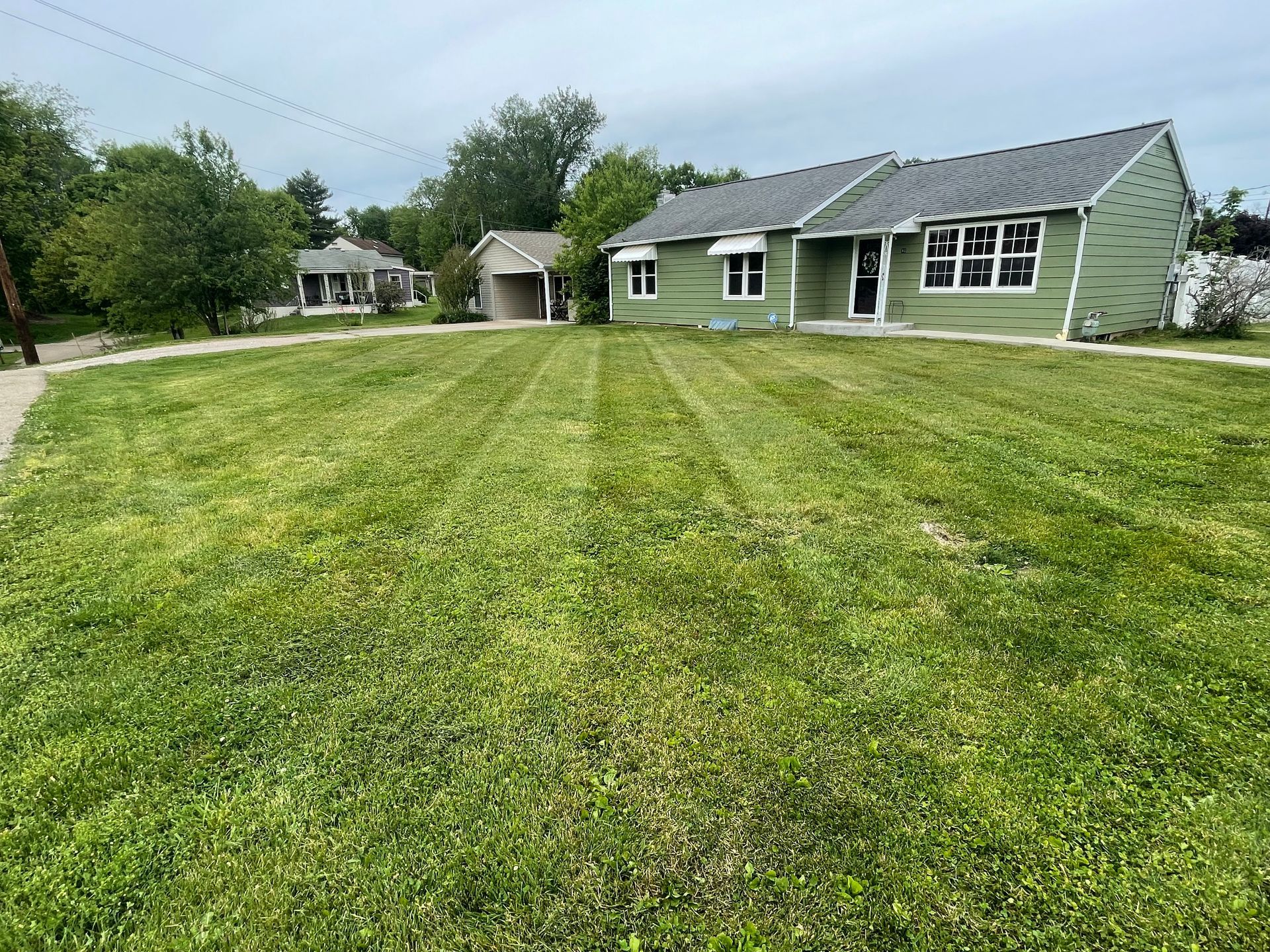
Turf That Grows Thicker and Greener
Lawn Fertilization in Athens for stronger root systems and seasonal growth
Lawns lose nutrients each time they're mowed, especially during periods of active growth when clippings are removed rather than left to decompose. Fertilizer applications replace those nutrients and support the processes that produce thicker turf, deeper roots, and better color. Brennan's Lawn & Landscaping applies fertilizer based on seasonal growing conditions in Athens, where spring and fall represent peak growth periods and nutrient demand is highest. Proper fertilization encourages lawns to outcompete weeds by filling in thin areas before opportunistic plants take hold.
Applications are timed to match when grass is actively growing and can absorb nutrients most efficiently. Spring fertilization supports rapid shoot growth and green-up after dormancy, while fall feeding strengthens roots before winter and promotes early spring recovery. Fertilizer blends vary by season to deliver the right nutrient ratios for current growth stages.
Request a lawn evaluation to identify nutrient gaps and schedule seasonal applications.
What Changes After Fertilization Is Applied
Fertilized lawns show visible improvement within one to two weeks as nitrogen stimulates chlorophyll production and turns grass a darker green. Over time, consistent applications lead to thicker turf because nutrients support tillering, the process where grass plants produce additional shoots from the base. Thicker turf shades out weed seeds and creates a denser surface that recovers faster from foot traffic or stress.
You'll notice grass that maintains color longer between waterings, fills in bare patches more quickly, and develops a uniform appearance across the lawn. Root systems grow deeper with regular feeding, which improves drought tolerance and nutrient uptake from the soil. Fertilized lawns also respond better to other treatments like aeration and seeding because they have the energy reserves needed to recover and grow.
Fertilization works best when combined with proper mowing height and adequate water during dry periods. The service does not include weed control or soil pH adjustment, which are separate treatments that address different lawn health factors.
Questions Before Starting Your Project
Clients often ask about application timing, safety concerns, and how fertilization fits with other lawn care services they're already using.
When should lawns be fertilized for best results?
Spring applications support active growth as temperatures warm, while fall feeding is often considered the most important because it builds root strength before dormancy and fuels early spring green-up.
How soon after fertilization can the lawn be used?
Most granular fertilizers are safe for foot traffic immediately after application, though watering the lawn afterward helps nutrients move into the soil and reduces any surface residue.
What happens if fertilizer is applied during drought conditions?
Fertilizing during prolonged dry periods can stress turf because grass needs moisture to absorb and use nutrients—applications are typically rescheduled if rainfall or irrigation is insufficient.
Does fertilization help lawns recover from damage or thin areas?
Fertilized grass recovers faster from stress because it has the nutrients needed to produce new growth, though severe thinning often requires overseeding in addition to feeding for full restoration.
How does fertilization in Athens differ from other regions?
Athens lawns face clay soils that can limit nutrient availability, and seasonal temperature swings affect when grass actively grows, so timing applications to match local conditions improves uptake and results.
Brennan's Lawn & Landscaping tailors fertilizer applications to your lawn's current condition and seasonal growth patterns. Call (740) 856-2998 to arrange an evaluation and discuss a fertilization schedule.